



Over one-third of senior leaders report using AI several times a week or more—making them twice as likely as individual contributors to use AI at least a few times a week. This gap reveals a critical truth: When it comes to AI, leadership adoption sets the tempo for organizational transformation. In times of rapid disruption, organizations need more than available technology to spur adoption; they need strong leadership.

Leadership is not a passive trait; it’s cultivated through deliberate action, continuous growth, and actionable goals. Leadership goals involve intentional behaviors, skills, and habits that leaders commit to improving over time, driving both personal and organizational success. These goals ensure that leaders evolve alongside their teams and remain effective in navigating challenges in the workplace.

Technical expertise is a strong foundation, but in uncertain times, leaders need trust, vision, and execution capability to effectively guide their teams.
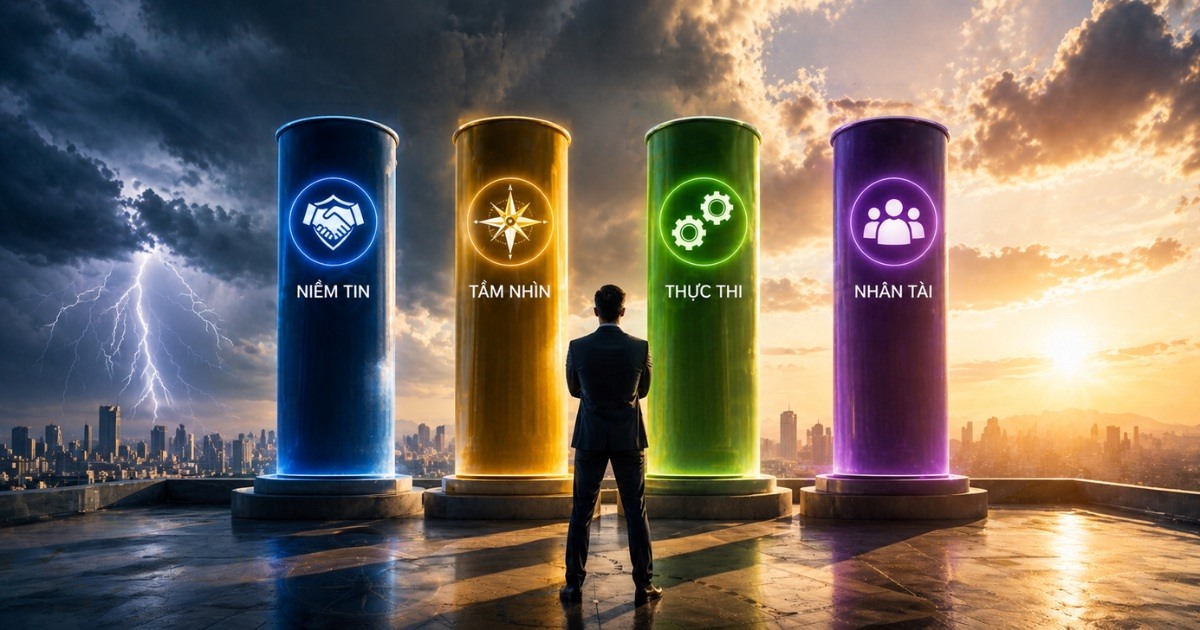
A risky domino effect: A distant vision without trust becomes an illusion; strong execution without talent leads to exhaustion. Every element within the core leadership framework is critically interdependent. A crack in any pillar—Trust, Vision, Execution, or Talent—can destabilize the entire system.